
Automotive Components for Automotive Manufacturing Operations
AIoT system for automotive manufacturing with workforce
tracking, traceability,
WIP monitoring, inventory visibility, and factory IoT intelligence.
AIoT Visibility, Workforce Intelligence, & Production Flow Analytics for Automotive Manufacturing
Automotive Components delivers AIoT-enabled operational intelligence engineered specifically for automotive component manufacturing environments requiring continuous workforce visibility, connected production telemetry, industrial traceability, synchronized inventory orchestration, manufacturing access governance, and real-time shopfloor intelligence across high-volume automotive operations. The system supports connected automotive production systems operating stamping presses, robotic welding cells, CNC machining environments, paint shop sequencing systems, powertrain assembly operations, supplier logistics yards, automated storage systems, and final assembly workflows where production continuity, takt-time stability, operator accountability, and digital manufacturing traceability are operational requirements.
Automotive manufacturing facilities increasingly rely on industrial IoT infrastructure, edge AI analytics, RFID material intelligence, BLE workforce telemetry, UWB positioning systems, machine vision monitoring, industrial sensor networks, and connected MES environments to support production throughput, recall readiness, manufacturing quality assurance, and synchronized supplier operations. Automotive Components integrates these AIoT technologies into a unified automotive manufacturing intelligence system supporting workforce movement analytics, industrial asset visibility, WIP synchronization, production queue monitoring, supplier batch traceability, and manufacturing telemetry orchestration across connected automotive plants. The system supports automotive plants operating stamping presses, robotic welding cells, machining centers, paint shops, powertrain assembly operations, supplier logistics yards, and final assembly lines where production continuity, personnel safety, material accountability, and traceability compliance are operational priorities.
Automotive manufacturing facilities operate under demanding throughput targets, just-in-time material delivery requirements, strict supplier coordination models, and recall readiness obligations. Production teams must coordinate workforce movement, tooling availability, WIP progression, component genealogy, and industrial access governance across multiple shifts while maintaining synchronization between ERP, MES, SCADA, warehouse systems, and connected factory infrastructure. Automotive Components provides real-time operational intelligence using AIoT technologies including RFID, BLE, UWB, industrial gateways, edge AI processing, machine vision, MQTT messaging, and OPC UA connectivity.
The system focuses on practical manufacturing visibility requirements instead of generic enterprise software terminology. Automotive plants require precise location intelligence for personnel, production assets, returnable racks, tooling dies, AGVs, pallets, containers, forklifts, and WIP materials moving across complex manufacturing workflows. Automotive Components supports these requirements through integrated AI-driven analytics, industrial wireless infrastructure, factory telemetry pipelines, and operational dashboards designed for manufacturing engineers, plant managers, industrial automation teams, EHS personnel, and production supervisors.
Automotive AIoT System Overview
Automotive Components combines workforce intelligence, production visibility, industrial IoT infrastructure management, and automotive traceability into a unified operational system built for connected automotive manufacturing systems. The system supports deployment across single plants, multi-site production networks, supplier coordination environments, and distributed manufacturing operations.
Workforce Tracking
Workforce tracking across assembly lines, robotic welding cells, logistics zones, and restricted production areas

Access Governance
Factory access governance with RFID badges, biometric readers, UWB positioning, and industrial access event logging
WIP Tracking
Automotive WIP tracking across machining operations, assembly queues, buffer zones, and production cells
Inventory Synchronization
Inventory synchronization between supplier deliveries, warehouse staging areas, Kanban replenishment systems, and production lines

VIN Traceability
VIN-linked traceability and lot genealogy tracking for recall readiness and supplier batch correlation

Tooling Monitoring
Tooling asset monitoring for dies, fixtures, returnable racks, AGVs, forklifts, and mobile production assets

IoT Management
Industrial IoT device management for sensors, gateways, BLE beacons, RFID infrastructure, and UWB positioning systems
Manufacturing Integration
SAP, MES, SCADA, MQTT, and OPC UA integration for enterprise manufacturing connectivity

Shopfloor Dashboards
Real-time shopfloor dashboards supporting manufacturing operations, EHS monitoring, production analytics, and maintenance coordination
Automotive manufacturers frequently operate mixed production environments where legacy industrial automation systems coexist with modern IoT infrastructure. Automotive Components supports integration across heterogeneous manufacturing systems without requiring complete replacement of existing industrial equipment or automation investments.
Automotive Workforce Tracking Intelligence for Connected Manufacturing Plants
Personnel visibility is critical in automotive manufacturing operations where large workforces operate across synchronized production schedules, robotic welding zones, automated conveyor systems, paint curing environments, logistics corridors, material staging areas, machining cells, and high-throughput assembly operations. Automotive manufacturers require real-time workforce telemetry supporting industrial safety governance, operator accountability, restricted zone compliance, contractor management, emergency response coordination, and production labor optimization. Automotive Components supports workforce intelligence through AI-enabled personnel monitoring technologies that improve operational coordination and safety compliance.
The workforce visibility framework supports:
- Components line operator monitoring across high-throughput production environments
- Assembly cell presence tracking for robotic manufacturing coordination
- Shift zone workforce visibility for multi-shift labor operations
- Supplier contractor movement analytics for temporary workforce management
- Digital shopfloor workforce logs for manufacturing audit requirements
- Labor analytics supporting overtime visibility and staffing optimization
- Emergency muster tracking during plant evacuations and safety incidents
- Forklift proximity alerts for personnel operating in material handling zones
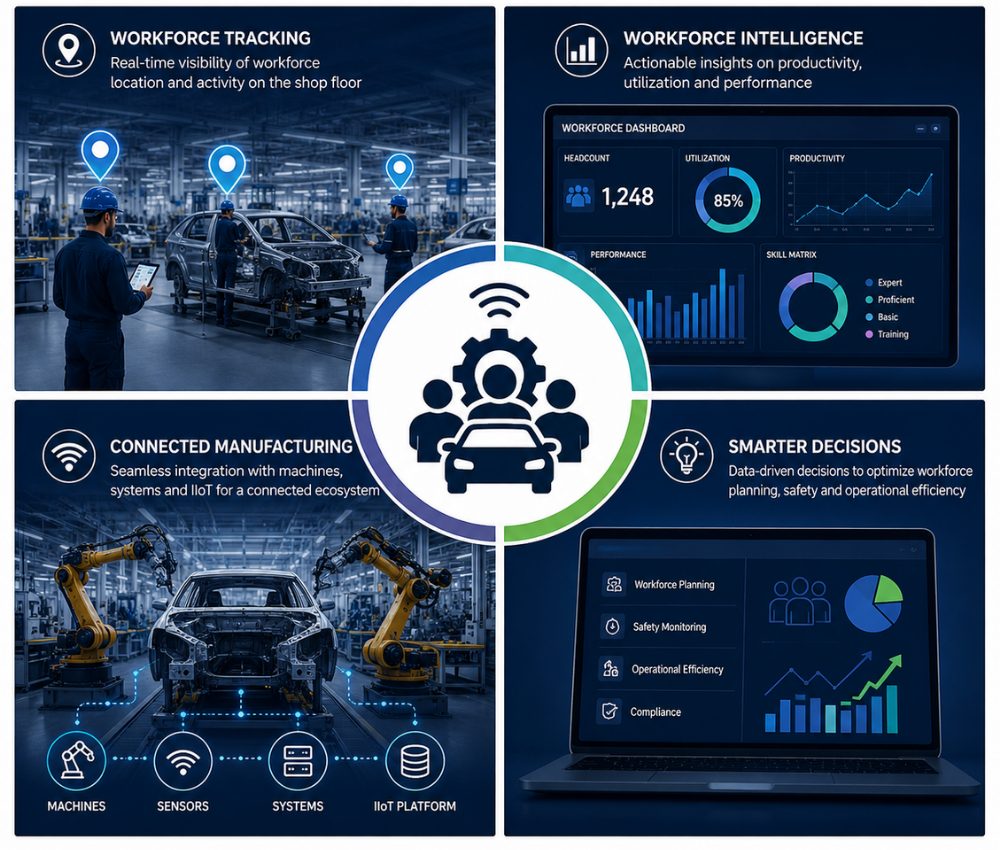
RFID workforce badges, BLE personnel devices, and UWB positioning tags provide continuous visibility into workforce movement patterns while supporting production accountability and industrial safety monitoring. Manufacturing supervisors can identify workforce congestion areas, staffing imbalances, restricted zone violations, and production bottlenecks affecting operational throughput.
Automotive operations with welding cells, stamping presses, automated guided vehicles, and high-temperature paint facilities require stronger workforce coordination than conventional industrial environments. Automotive Components supports safety-oriented workforce analytics designed for manufacturing conditions where personnel exposure to moving equipment, energized machinery, hazardous materials, and restricted automation zones must be continuously monitored.
Factory Access Governance and Industrial Security
Automotive manufacturing environments frequently contain restricted production cells, secure tooling rooms, robotics areas, hazardous processing zones, and supplier-controlled inventory staging locations that require controlled personnel access. Automotive Components supports industrial access governance using AIoT-enabled authentication, event monitoring, and industrial security analytics.
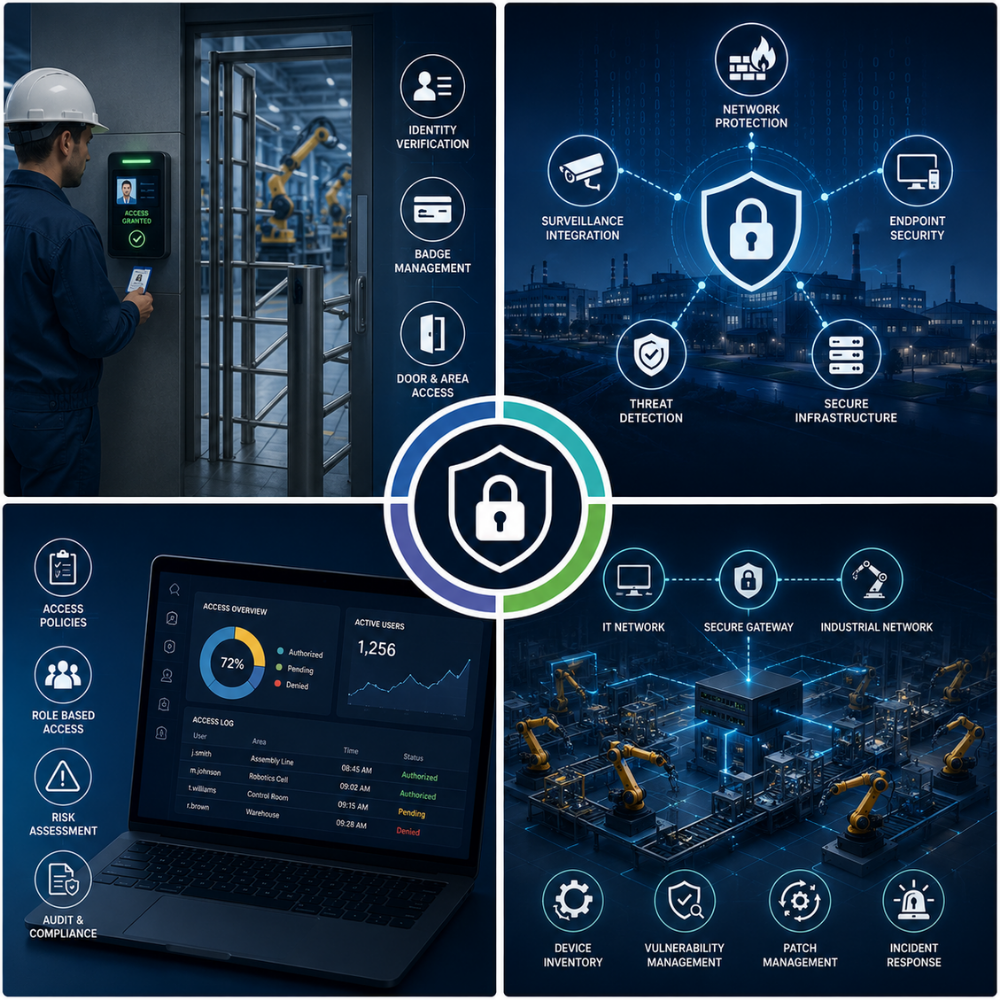
Factory access governance capabilities include:
- Components plant entry authentication for workforce and contractor management
- Restricted production cell access monitoring for robotics and automation areas
- Tool room authorization control for high-value manufacturing equipment
- Visitor governance for automotive production facilities
- Industrial endpoint access policy management
- Vehicle entry recognition for logistics yards and transportation checkpoints
- Factory turnstile integration with workforce identity systems
- Access event analytics supporting compliance investigations and operational audits
Manufacturing access control systems must support rapid workforce movement while maintaining traceability of personnel entry, contractor activity, and equipment authorization. Automotive Components integrates industrial access infrastructure with workforce analytics and production intelligence systems to provide contextual operational visibility.
Manufacturing plants operating under IATF 16949 quality management processes and customer-specific compliance requirements frequently require detailed access event logging, workforce accountability, and operational traceability. The system supports these requirements through centralized industrial event management and real-time access intelligence.
Automotive Parts Flow Intelligence, WIP Visibility, and Manufacturing Synchronization
Automotive manufacturing operations depend on synchronized movement of raw materials, stamped components, tooling dies, returnable containers, Kanban inventory, sequenced assemblies, WIP inventory, powertrain components, and supplier-delivered materials across interconnected production cells. Production continuity depends on real-time visibility into material movement, assembly sequencing, tooling utilization, AGV coordination, warehouse replenishment, and supplier synchronization across automotive manufacturing systems. Automotive Components provides production flow intelligence supporting automotive throughput optimization and material accountability.
Production flow monitoring capabilities include:
- WIP tracking across stamping, machining, welding, and assembly operations
- Components production buffer monitoring for throughput stabilization
- Assembly queue intelligence supporting line balancing operations
- Batch sequence visibility for synchronized production planning
- AGV coordination for automated material movement
- Returnable rack tracking across supplier logistics operations
- Raw material inventory visibility for production continuity
- Kanban replenishment monitoring for just-in-time manufacturing environments
- Warehouse stock flow analytics supporting automotive logistics operations
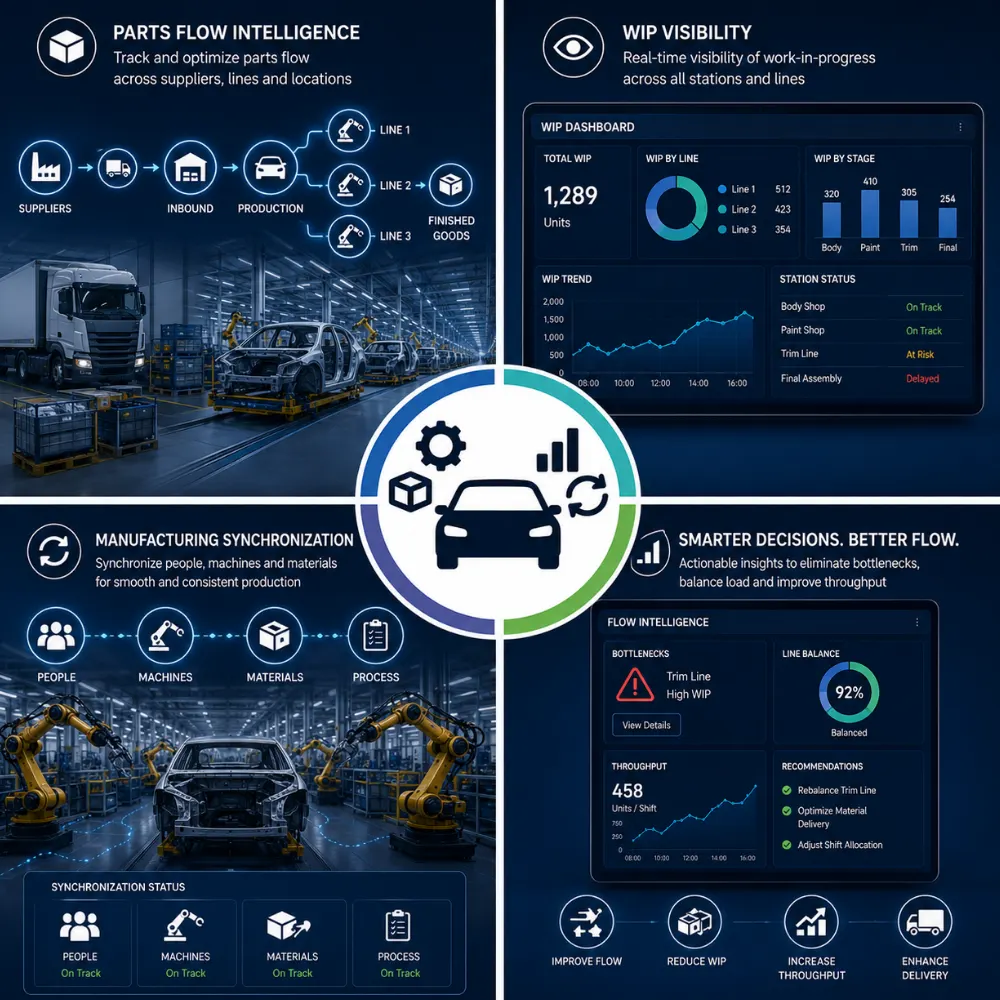
Automotive plants often experience production inefficiencies caused by incomplete visibility into material movement, assembly queue buildup, missing tooling, delayed replenishment activity, or disconnected warehouse systems. Automotive Components provides real-time production telemetry and manufacturing analytics supporting operational decision-making across connected production environments.
UWB positioning systems support high-accuracy tracking for tooling assets, mobile production equipment, and WIP materials moving between manufacturing cells. RFID infrastructure enables automated inventory event capture at production checkpoints, warehouse portals, assembly stations, and shipping locations. BLE monitoring technologies support low-power industrial visibility across broad factory environments.
Production engineers and operations managers gain access to manufacturing dashboards displaying live production status, bottleneck conditions, inventory movement, labor coordination metrics, and operational exceptions affecting throughput.
Automotive Traceability and Recall Readiness
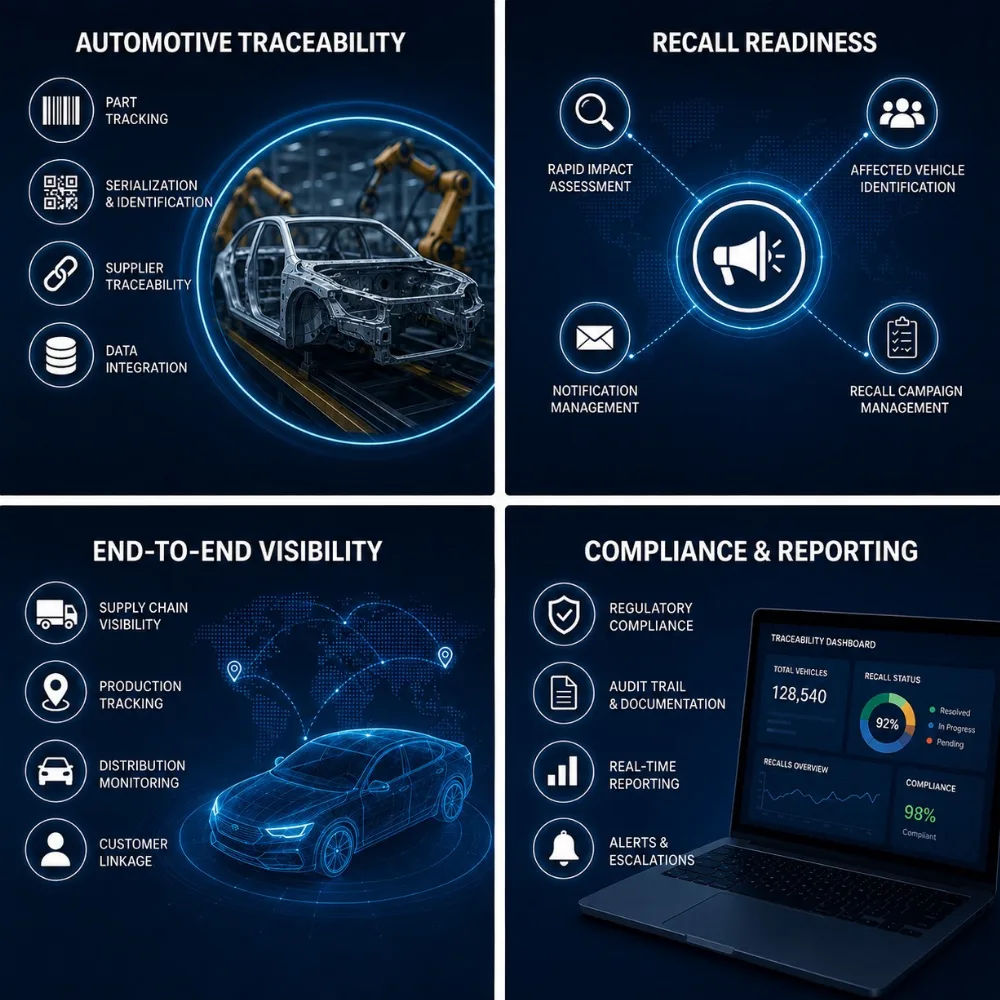
Automotive manufacturers operate under strict traceability obligations requiring component genealogy tracking, supplier lot correlation, production history visibility, and recall readiness monitoring. Automotive Components supports traceability operations through AIoT-enabled material tracking and production intelligence.
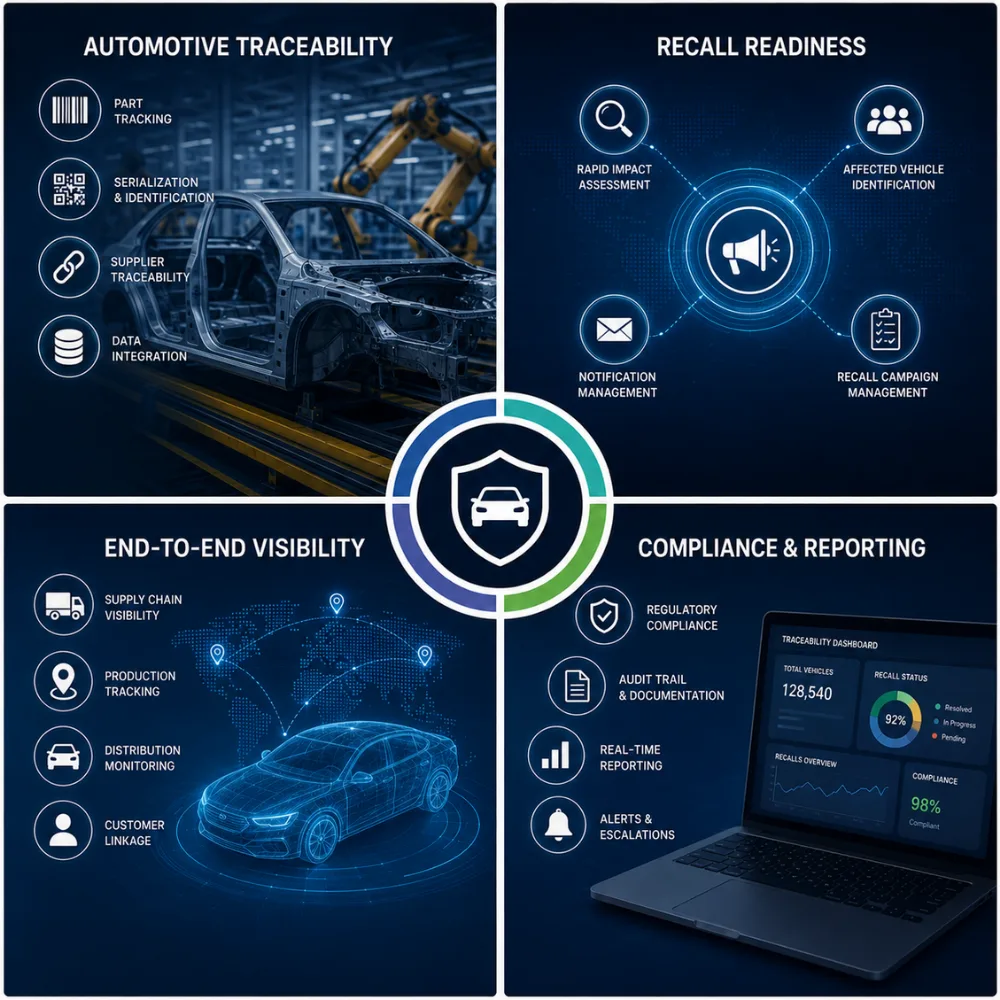
Traceability capabilities include:
- VIN-linked component traceability across production stages
- Supplier batch correlation for manufacturing accountability
- Automotive lot genealogy mapping for recall investigations
- WIP traceability event capture during assembly progression
- Barcode and RFID production checkpoint verification
- Manufacturing history logging across interconnected systems
- Production sequence monitoring for quality validation
- Supplier synchronization supporting inbound logistics traceability
Automotive production environments frequently require coordination between Tier 1 suppliers, machining operations, robotic welding systems, paint shop sequencing, powertrain assembly lines, and outbound logistics operations. Traceability data must remain synchronized across ERP systems, MES environments, warehouse management systems, and production automation systems.
Automotive Components supports connected traceability pipelines using MQTT event streaming, OPC UA manufacturing integration, and industrial middleware orchestration. Real-time production data routing enables manufacturing teams to identify affected production lots, isolate supplier-related quality issues, and accelerate recall response procedures.
Manufacturing organizations implementing digital traceability programs benefit from automated event capture rather than manual spreadsheet tracking or disconnected production logs. The system improves visibility into manufacturing genealogy while reducing delays associated with production investigations and compliance reporting.
Industrial IoT Device Intelligence
Connected automotive manufacturing operations rely on large-scale deployments of industrial sensors, RFID readers, BLE beacons, industrial gateways, edge computing infrastructure, UWB positioning systems, and environmental monitoring devices. Automotive Components provides centralized management and operational monitoring for industrial IoT infrastructure.
Industrial IoT management capabilities include:
- Factory sensor provisioning and lifecycle administration
- Industrial gateway configuration management
- Firmware lifecycle monitoring for connected devices
- Edge device diagnostics and operational telemetry
- RFID infrastructure management for manufacturing traceability
- BLE beacon administration supporting workforce visibility
- UWB tag monitoring for precision asset positioning
- Environmental sensor management for facility operations
- Machine vibration monitoring supporting maintenance visibility
- Energy meter administration for manufacturing utilities monitoring
Industrial device deployments in automotive plants must support reliability under welding interference, metal-dense environments, high-temperature processing conditions, vibration exposure, and complex radio frequency conditions. Automotive Components supports industrial-grade connectivity system designed for demanding manufacturing operations.
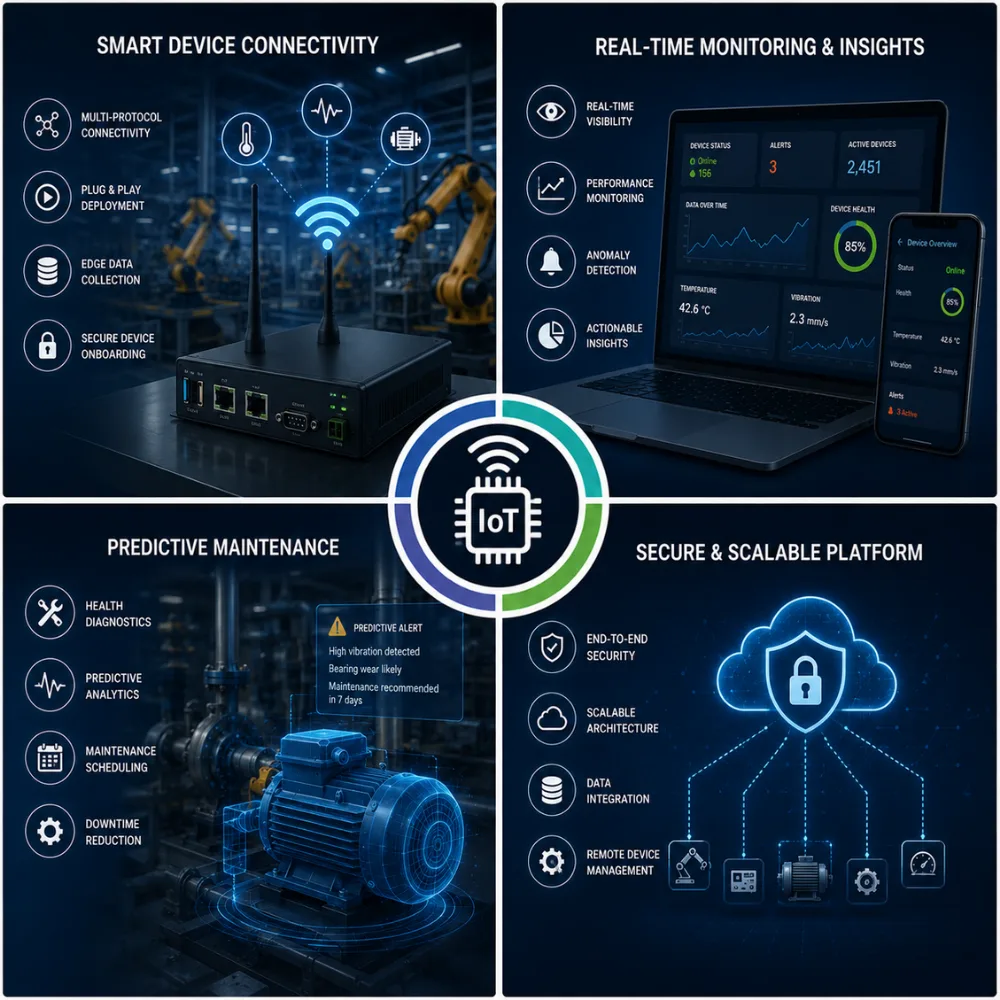
.The system enables centralized monitoring of connected device health, wireless infrastructure performance, edge processing activity, and industrial telemetry flows across multi-building production environments. Plant IT teams and industrial automation engineers can manage large-scale device fleets while maintaining operational visibility into factory communications infrastructure.
RFID, BLE, UWB, and Industrial Wireless Manufacturing Technologies
Automotive manufacturing environments require layered industrial wireless system combining RFID, BLE, UWB, industrial Wi-Fi, edge gateways, sensor telemetry infrastructure, and machine connectivity frameworks to support workforce visibility, traceability intelligence, manufacturing telemetry, and industrial automation coordination across connected factories. Automotive Components supports integrated deployment strategies combining RFID, BLE, and UWB technologies across manufacturing operations.
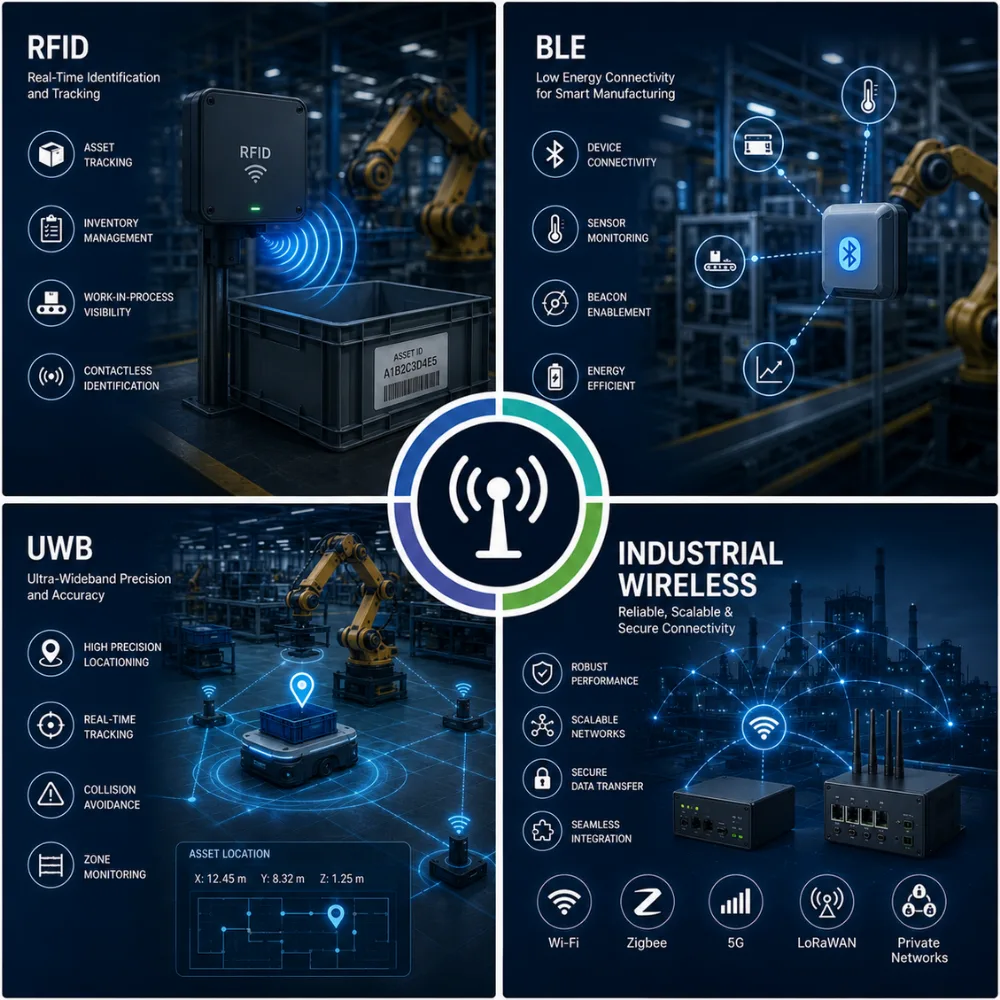
RFID technologies support:
- Production checkpoint scanning
- Returnable rack identification
- Inventory reconciliation
- Supplier shipment verification
- WIP event capture
BLE infrastructure supports:
- Workforce monitoring
- Facility occupancy analytics
- Low-power environmental sensing
- Mobile asset visibility
- Industrial beacon communications
- Warehouse movement monitoring
UWB positioning technologies support:
- Precision tooling location tracking
- Personnel proximity monitoring
- Forklift safety intelligence
- AGV coordination
- High-accuracy manufacturing visibility
- Production asset tracking in dense industrial environments
Automotive facilities frequently require blended wireless system because no single industrial communication technology addresses every operational requirement. Automotive Components enables coordinated management across heterogeneous industrial wireless environments while maintaining unified operational analytics.
SAP, MES, and SCADA Manufacturing Connectivity
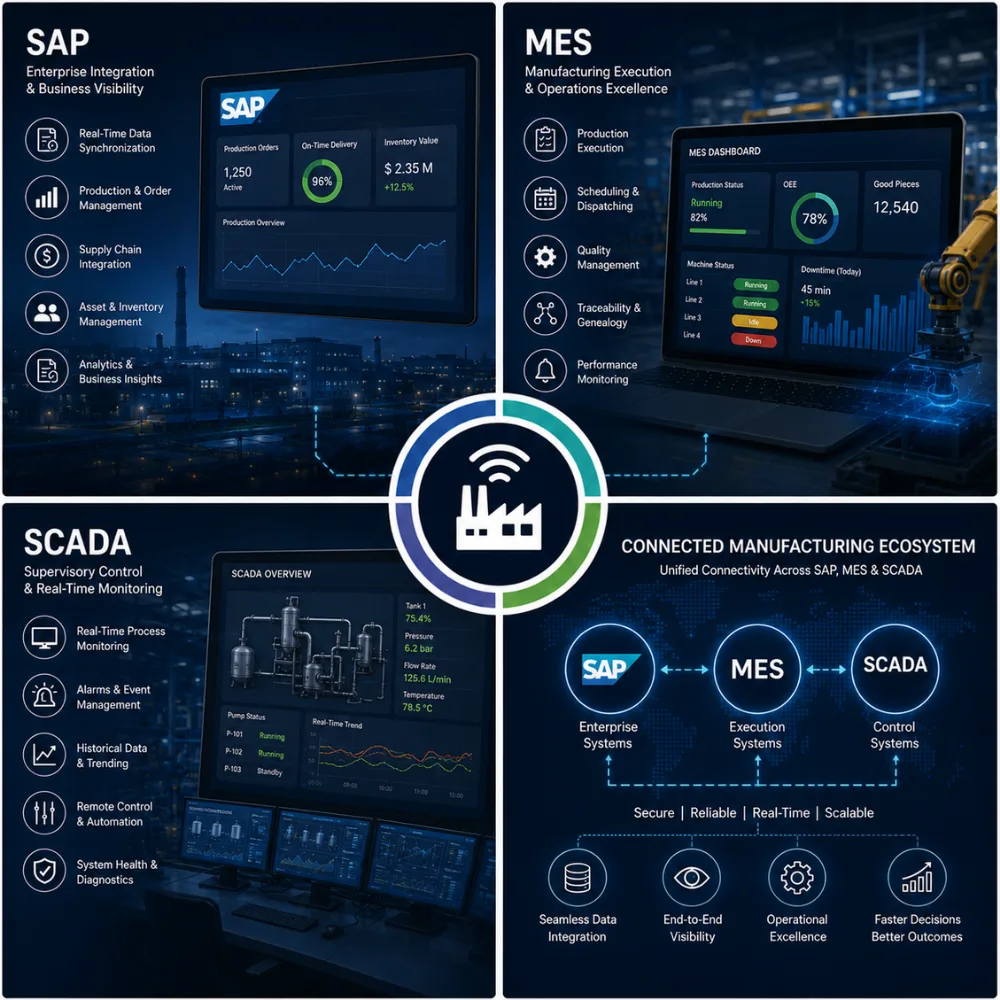
Automotive manufacturing operations depend on synchronization between production systems, enterprise systems, industrial automation infrastructure, and factory telemetry environments. Automotive Components integrates with manufacturing systems through industrial connectivity frameworks supporting operational data exchange.
Integration capabilities include:
- SAP manufacturing connectors supporting enterprise synchronization
- MES data exchange for production coordination
- SCADA integration supporting industrial automation visibility
- MQTT manufacturing messaging pipelines
- OPC UA production telemetry connectivity
- Industrial event streaming system
- API gateway management for connected manufacturing systems
- Multi-plant synchronization supporting distributed operations
Automotive manufacturers frequently operate hybrid environments combining cloud applications, on-premise production infrastructure, edge computing systems, and industrial automation networks. Automotive Components supports flexible deployment models aligned with operational security requirements and manufacturing infrastructure constraints.
Edge AI processing supports local analytics execution for latency-sensitive production operations where continuous connectivity to centralized cloud systems may not be practical. Manufacturing organizations can deploy private server systems, factory edge systems, or hybrid cloud environments based on operational requirements.
Automotive Manufacturing Applications for Connected Factory Operations
Automotive Components supports deployment across multiple automotive manufacturing operations where workforce intelligence, production visibility, inventory synchronization, and industrial traceability are operational requirements.
Automotive Components supports connected manufacturing applications across automotive production systems where AI-driven telemetry, industrial IoT intelligence, manufacturing analytics, and real-time operational visibility are essential for throughput optimization, quality assurance, workforce safety, and synchronized production control.
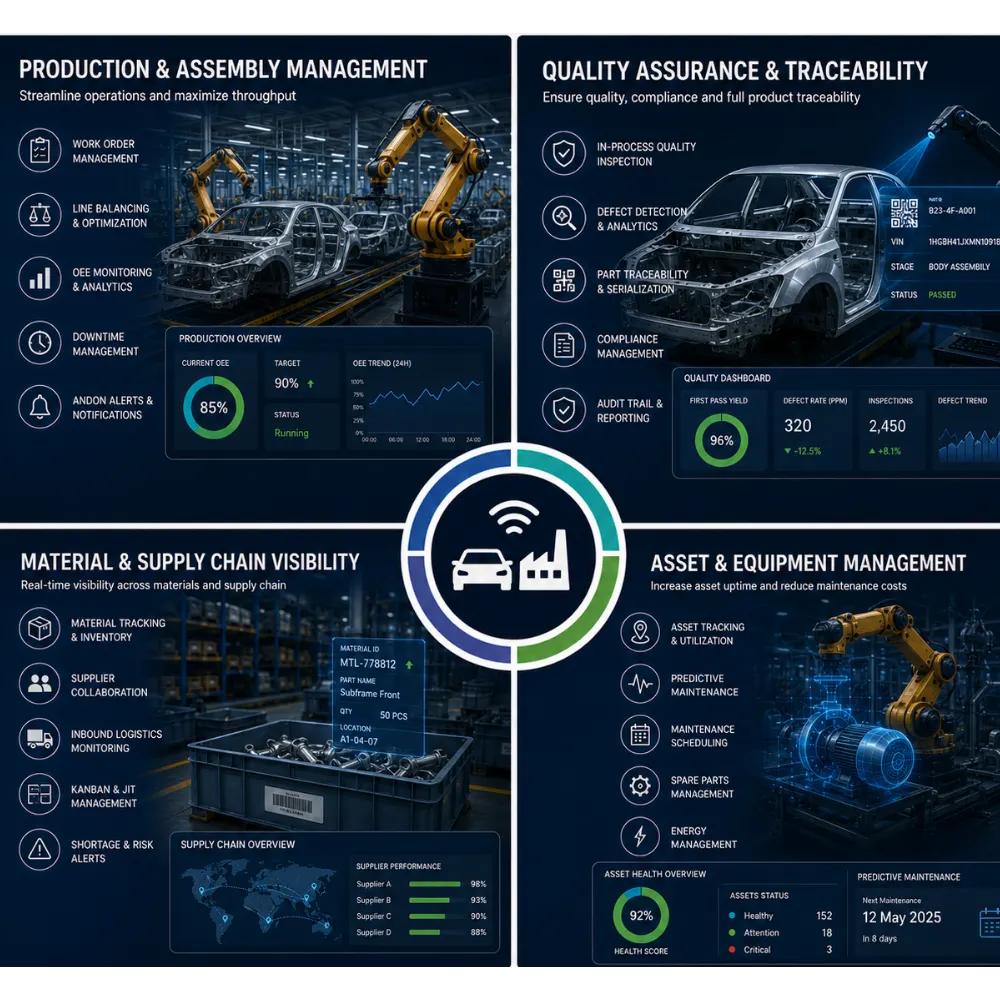
Common automotive manufacturing applications include:
- Stamping operations requiring die tracking and workforce safety monitoring
- Robotic welding environments supporting restricted zone visibility and production analytics
- Paint shop operations requiring controlled personnel access and WIP sequencing
- Final assembly operations supporting workforce coordination and component traceability
- Supplier logistics operations requiring returnable rack tracking and shipment visibility
- Powertrain manufacturing environments requiring genealogy monitoring and tooling intelligence
Manufacturing operations using AGVs, collaborative robotics, automated storage systems, and connected assembly infrastructure require continuous synchronization between workforce activity and automated production systems. Automotive Components supports these environments through integrated AIoT operational analytics.
Automotive manufacturers operating mixed-model production environments benefit from real-time operational visibility into labor allocation, production throughput, inventory availability, supplier coordination, and industrial safety conditions.
Enterprise Deployment and Manufacturing Expertise
Automotive Components supports enterprise-scale deployment models aligned with automotive manufacturing operational requirements, cybersecurity policies, and production continuity objectives. The system supports cloud deployment, private manufacturing infrastructure, edge processing systems, and hybrid industrial environments.
The organization was created within Aperture Venture Studio with support from GAO. Drawing from two decades of IoT experience supporting thousands of industrial IoT customers and large-scale connected manufacturing deployments, Automotive Components incorporates operational knowledge derived from real manufacturing environments. Extensive R&D investments, industrial quality assurance processes, and technical expertise support automotive manufacturing deployments requiring operational reliability and industrial scalability.
The engineering organization includes technical leadership with advanced academic and industrial expertise supporting AI, IoT, industrial automation, manufacturing analytics, and connected factory systems. Operational experience includes support for Fortune 500 manufacturers, research institutions, industrial engineering organizations, and government agencies across North America.
Technical Resources, Industrial AIoT Guidance, and Manufacturing Consultation
Automotive Components provides technical resources supporting manufacturing engineering teams, plant operations personnel, industrial automation specialists, and enterprise IT organizations implementing connected automotive manufacturing environments.
Available technical resources include:
- Product documentation for industrial IoT deployments
- Manufacturing compliance guidance supporting operational validation
- RFID, BLE, and UWB deployment references
- MES and SCADA integration documentation
- Industrial wireless system guidance
- Manufacturing traceability standards references
- AIoT system validation procedures
- Industrial cybersecurity operational practices
- Production monitoring implementation guidance
Organizations evaluating automotive AIoT deployments can engage Automotive Components regarding workforce visibility initiatives, manufacturing traceability requirements, industrial device management strategies, factory integration planning, and connected production intelligence programs.
Contact Automotive Components
Automotive Components supports automotive manufacturers, system integrators, industrial engineering organizations, logistics operations, and connected factory initiatives requiring AIoT-driven workforce visibility, access governance, inventory intelligence, WIP monitoring, industrial traceability, and manufacturing connectivity.
Consultation discussions may include:
- Automotive workforce tracking requirements
- Manufacturing traceability modernization
- Industrial IoT system planning
- RFID, BLE, and UWB deployment strategies
- MES and SCADA integration requirements
- Automotive production visibility initiatives
- Multi-plant operational synchronization
- Factory access governance modernization
- WIP tracking and production analytics
- Supplier logistics visibility programs
Automotive Components delivers operational intelligence focused on the manufacturing realities of automotive production environments where workforce coordination, production continuity, material traceability, industrial safety, and connected factory visibility directly influence manufacturing performance.